


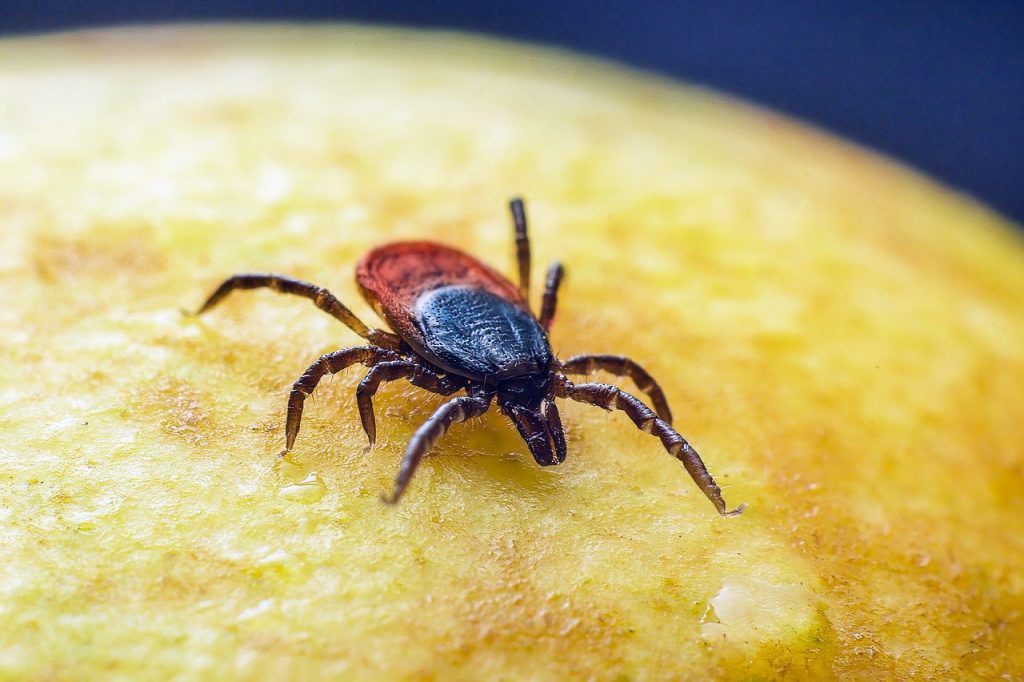
Ticks are small, parasitic arachnids that pose a significant health risk to both humans and animals. They are found throughout the Inland Empire. These tiny creatures are known to transmit various diseases, making it crucial to understand their habits, habitats, and how to prevent encounters. Craig & Sons technicians are specially trained and equipped to identify and treat tick infestations for your safety.
What are Ticks?
Ticks are not insects but belong to the arachnid family, which also includes spiders and mites. They have eight legs (six in their larval stage) and a flat, oval-shaped body. Ticks go through four life stages: egg, larva, nymph, and adult. They require a blood meal at each stage to develop. Different tick species vary in size, color, and preferred hosts.
How Ticks Travel
Ticks are not capable of flying or jumping. Instead, they employ a strategy called “questing.” They climb onto low-lying vegetation, such as grass or shrubs, and extend their front legs, waiting for a host to brush by. When a host comes into contact, the tick quickly grabs on and begins searching for a suitable place to bite. Ticks can be transported long distances by migrating birds and mammals.
Where Ticks Live
Ticks thrive in wooded areas, tall grasses, brush, and leaf litter. They prefer humid environments and are often found in areas with dense vegetation that provides shade and moisture. In Southern California, ticks are commonly found in hiking trails, parks, and even suburban gardens with ample vegetation. They are most active during warmer months, but some species can remain active year-round in milder climates.
What Ticks Eat
Ticks are obligate hematophages, meaning they feed exclusively on blood. They attach themselves to a host and use their specialized mouthparts to pierce the skin and draw blood. The feeding process can last several days, depending on the tick species and life stage. Ticks can feed on a wide range of hosts, including mammals (deer, rodents, humans, pets), birds, and reptiles. Humans are not exempt. A tick can pierce human skin and draw blood for its food.
Dangers to Humans
Ticks are vectors for several serious diseases, including:
- Lyme Disease: This bacterial infection is transmitted by the blacklegged tick (deer tick) in the eastern US and the western blacklegged tick in the western US. Symptoms can include a characteristic “bull’s-eye” rash, fever, fatigue, joint pain, and neurological problems if left untreated.
- Rocky Mountain Spotted Fever (RMSF): This bacterial disease is transmitted by the American dog tick, Rocky Mountain wood tick, and brown dog tick. Symptoms can include fever, headache, rash, muscle pain, and nausea.
- Ehrlichiosis: This bacterial infection is transmitted by the lone star tick. Symptoms can include fever, headache, muscle aches, and fatigue.
- Anaplasmosis: This bacterial infection is transmitted by the blacklegged tick. Symptoms are similar to ehrlichiosis.
Dangers to Animals
Ticks can also transmit diseases to pets, including:
- Lyme Disease: Dogs can develop Lyme disease, which can cause joint pain, lameness, and kidney problems.
- Ehrlichiosis and Anaplasmosis: These diseases can also affect dogs, causing similar symptoms to those seen in humans.
- Tick Paralysis: Certain tick species produce a toxin that can cause paralysis in dogs and other animals.
Prevention and Control
Preventing tick bites is the best way to reduce the risk of tick-borne diseases. When spending time outdoors in Riverside and San Bernardino counties, we recommend the following precautions:
- Wear light-colored clothing to make it easier to spot ticks.
- Tuck pants into socks and wear long sleeves.
- Use insect repellent containing DEET, picaridin, IR3535, oil of lemon eucalyptus (OLE), para-menthane-diol (PMD), or 2-undecanone.
- After spending time outdoors, perform a thorough tick check on yourself, your children, and your pets.
- Remove any attached ticks promptly using fine-tipped tweezers. Grasp the tick as close to the skin as possible and pull upward with steady, even pressure. Do not twist or jerk the tick.
- Consult your veterinarian about tick prevention products for your pets.
Call the Craig & Sons office at 909-335-1486 to schedule an inspection of your home or business as soon as possible. If you experience symptoms after a tick bite, consult a healthcare professional immediately. Early diagnosis and treatment are crucial for preventing serious complications from tick-borne diseases.